Arthashastra: The Eternal Blueprint of Power, Prosperity & Statecraft
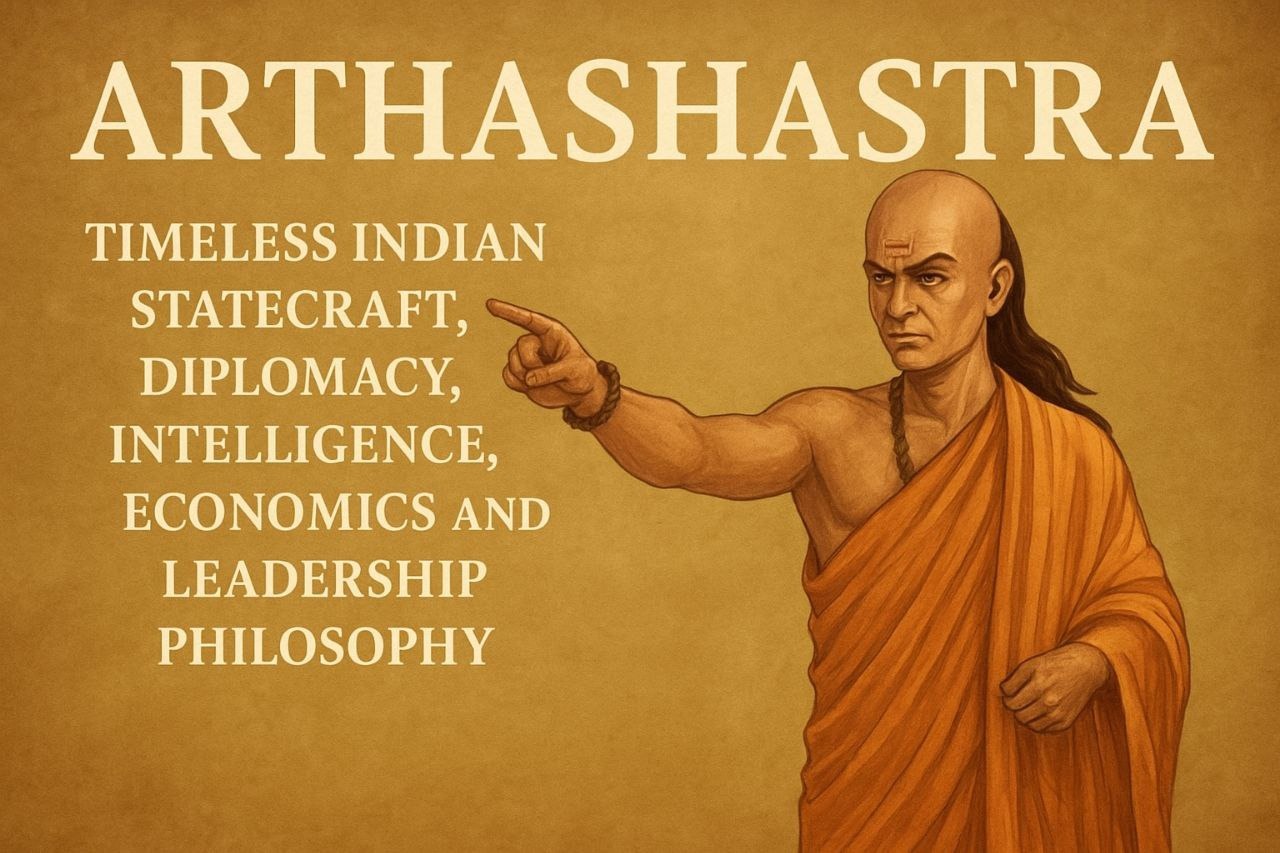
There are books that educate, books that illuminate, and books that transform.
But once in a civilization, a text emerges that architecturally redefines the very idea of governance, prosperity, survival, diplomacy, economics, and power.
For India, that text was Arthashastra, the brainchild of Vishnugupta Kautilya, popularly celebrated as Chanakya, mentor to Chandragupta Maurya and the intellectual fulcrum of one of the world’s greatest empires.
Arthashastra is not merely a political manual. It is an elaborate civilizational algorithm, a blueprint for governance that seamlessly weaves morality, economics, intelligence, psychology, diplomacy, and warfare. Written thousands of years ago, it still applies with startling precision to modern politics, corporate strategy, international diplomacy, personal leadership, and national security.
As we traverse this expansive exploration, you will witness how a 6,000-verse text continues to breathe beneath the skin of nations, CEOs, intelligence agencies, and even personal decisions.
“Power is not merely seized; it is designed through discipline, foresight and inner clarity.” ~ Adarsh Singh
Let us begin.
1} Civilizational Roots: The Soil from Which Arthashastra Emerged
To understand Arthashastra, one must first appreciate the civilization that birthed it. Ancient India was not an abstract philosophical playground; it was a dynamic mosaic of:
👉 Kingdoms
👉 Oligarchies
👉 Tribal confederations
👉 Merchant guilds
👉 Religious institutions
👉 Cross-continental trade routes
It flourished on the foundations of the Vedas and philosophical epics like Ramayana and Mahabharata, where governance dilemmas were not theoretical, they were lived.
Competing powers required:
👉 Diplomatic agility
👉 Economic resilience
👉 Intelligence superiority
👉 Moral legitimacy
Arthashastra was the answer.
2} The Lineage of Moral and Political Sciences (Niti-Shastra Tradition)
Arthashastra stands atop a towering heritage of statecraft literature:
Niti Shastra by Brahma (100,000 chapters)
Moral layout of governance and cosmic law.
Vaisalaksha Shastra by Shiva (10,000 chapters)
Principles of punitive protection and order.
Bahudantaka Shastra by Indra (10,000+ chapters)
Warfare, social order, climate influence.
Barhaspatya Shastra by Brihaspati (3,000 chapters)
Diplomacy, taxation, treasury management.
Ausanasa Shastra by Shukra (1,000 chapters)
Espionage, black operations, covert power.
Chanakya did not invent statecraft, he synthesized it into implementable, tactical clarity.
3} The Structure of Arthashastra
👉 15 Books (Adhikaranas)
👉 150 Chapters
👉 6,000 Verses
Each book meticulously dissects a domain of governance:
👉 Law
👉 Finance
👉 Crime suppression
👉 War
👉 Espionage
👉 Diplomacy
👉 City planning
👉 Agriculture
👉 Trade systems
👉 Intelligence networks
It becomes clear: this is not literature; this is software.
4} Central Philosophy: Artha Is Not Just Wealth
“Artha” is usually translated as wealth, but Chanakya expands it:
👉 Sustainment of life
👉 Security of citizens
👉 National prosperity
👉 Resource management
👉 Public order
👉 State stability
In his hierarchy:
👉 Dharma (Moral Order)
👉 Artha (Material Foundation)
👉 Kama (Desires)
👉 Moksha (Liberation)
Artha stabilizes society. Without it, everything collapses.
“Vision without resources is hallucination; resources without vision are chaos.” ~ Adarsh Singh
5} Dharmasthiyam ~ Codes of Law and Judges
This section outlines the architecture of justice:
👉 Rules of evidence
👉 Cross-examination
👉 Witness credibility
👉 Penalties
👉 Property conflicts
👉 Public misconduct
It emphasizes:
👉 Legal impartiality
👉 Speedy justice
👉 Transparency
Chanakya warns against judicial corruption brutally, recognizing that when judges rot, citizens become wolves.
Today, judiciary reforms repeatedly quote principles parallel to Dharmasthiyam.
6} Vinaya-dhikarikam ~ The Education and Equipment of the King
A king must train in:
👉 Military strategy
👉 Economic planning
👉 Psychological assessment
👉 Diplomacy
👉 Law and scripture
For Chanakya, leadership is not a privilege, it is a disciplined vocation.
Modern equivalent:
👉 Prime ministerial training modules
👉 Diplomatic academies
👉 Executive leadership programs
7} Adhyaksha-prachara ~ State Departments and Administrative Activities
Arthashastra describes:
👉 The mining department
👉 Trade inspections
👉 Animal husbandry
👉 Weights and measures
👉 Customs offices
👉 Road construction
👉 Granary management
Chanakya builds not just empires, he builds systems.
If followed today, it would eliminate:
👉 Bureaucratic corruption
👉 Resource leakage
👉 Price manipulation
👉 Agricultural volatility
8} Kantaka-Sodhanam ~ Suppression of Crime
“Kantaka” means thorn. Criminals are thorns in civil order.
Chanakya employs:
👉 Undercover market agents
👉 Informer networks
👉 Sting operations
👉 Intelligence-backed sentencing
Jails are reformative when possible, punitive when needed.
Modern parallels:
👉 FBI informant programs
👉 Cyber-undercover operations
👉 Anti-corruption bureaus
9} Yogavrittam ~ Miscellaneous Conduct
This chapter covers:
👉 Administrative etiquette
👉 Civic behavior
👉 Public morality
👉 Social norms
👉 Duties of citizens
It proves Chanakya understood sociology centuries before modern theorists.
10} Mandala Theory ~ The Circle of Kings
Perhaps Chanakya’s greatest geopolitical contribution.
The world is a circle of concentric relationships:
👉 Immediate neighbor: natural enemy
👉 Neighbor’s neighbor: natural friend
👉 Peripheral states: balancing forces
This is visible today:
👉 NATO strategy
👉 India-UAE-Israel partnerships
👉 QUAD dynamics
👉 China’s border diplomacy
Chanakya understood geopolitics as geometry.
11} Shadgunyam ~ Sixfold Foreign Policy
A ruler chooses among:
1. Sandhi (Peace)
2. Vigraha (War)
3. Asana (Neutrality)
4. Yana (Preparation)
5. Samsraya (Seeking Refuge)
6. Dvaidhibhava (Dual Policy)
These maneuvers are dynamic, not moral.
Today:
👉 WHO diplomacy
👉 Indo-Pacific partnerships
👉 Trade sanctions
Economic corridors …reflect this spectrum.
12} Vyasanadhikaram ~ Calamities of the Kingdom
Chanakya lists dangers:
👉 Epidemics
👉 Food shortages
👉 Internal rebellions
👉 Corrupt ministers
👉 Enemy sabotage
👉 Drought
👉 Economic collapse
He prescribes contingency planning centuries before modern disaster management.
Today’s NDRF guidelines echo this framework.
13} Abhiyasatkarma ~ Preparations Before War
Sun Tzu echoes it later.
A war is won before it begins through:
👉 Terrain study
👉 Supply chains
👉 Spies
👉 Morale conditioning
👉 Psychological pressure
👉 Alliances
👉 Logistics reserves
Arthashastra highlights war-gaming simulation, a practice used today by:
👉 NATO
👉 Pentagon
👉 DRDO
14} Abaliyasam ~ Concerning the Weaker King
For weaker nations:
👉 Delay confrontation
👉 Negotiate
👉 Deceive strategically
👉 Form alliances
👉 Use psychological deterrence
This is the doctrine behind:
👉 Soft power
👉 Strategic ambiguity
👉 Multilateral diplomacy
15} Sangramikam ~ Army Structure and Combat Strategy
Chanakya discusses:
👉 Infantry structure
👉 Cavalry use
👉 War elephants
👉 Chariot strategy
Formations: crescent, needle, boar
He emphasizes:
👉 Terrain advantage
👉 Flank protection
👉 Reserve forces
Modern militaries still rely on these fundamentals.
16} Sanghavrittam ~ Policy Toward Oligarchies
Not all governance is monarchy.
Chanakya outlines:
👉 Republic management
👉 Merchant guild diplomacy
👉 Clan politics
👉 Advisory councils
Today:
👉 Lobby groups
👉 Corporate alliances influence
Religious organizations …mirror this complexity.
17} Aupanisadikam ~ Secret Practices
This is Chanakya the spymaster.
He describes:
👉 Secret agents
👉 Penetration networks
👉 Subterfuge
👉 Bribery
👉 Seduction intelligence
👉 Poison science
Techniques included:
👉 Courtesan spies
👉 Disguised monks
👉 Market informants
This is strikingly similar to:
👉 RAW
👉 CIA black ops
👉 MI6 infiltration
👉 Mossad deception techniques
“The sharpest weapon is the invisible hand of information.” ~ Adarsh Singh
18} Durgalambhopayah ~ Methods of Taking a Fort
Strategies include:
👉 Siege
👉 Starvation
👉 Poisoning water supply
👉 Underground tunneling
👉 Sabotage
👉 Covert infiltration
Modern parallels:
👉 Critical infrastructure targeting
👉 Cyber infiltration of airbases
👉 Economic blockade tactics
Fortresses today are digital.
19} Tantra-Yuktih ~ Meta-Methods of Thought
This is Chanakya’s cognitive science chapter.
He teaches:
👉 Logical inference
👉 Interpretation models
👉 Categorical reasoning
👉 Analytical framework building
It’s the closest ancient India comes to critical thinking pedagogy.
20} Economics and Fiscal Strategy
Arthashastra provides a robust economic model:
👉 Progressive taxation
👉 Anti-hoarding laws
👉 Market price oversight
👉 Agricultural prioritization
State monopolies on strategic resources
He classified revenue streams:
👉 Land tax
👉 Mines
👉 Customs
👉 Forest produce
👉 Trade duties
Modern economists still admire this balanced portfolio.
21} Urban Planning and Infrastructure
Chanakya details:
👉 City layout
👉 Fortification walls
👉 Sewage channels
👉 Market yards
👉 Artisan quarters
These fulfil:
👉 Security
👉 Hygiene
👉 Commerce
👉 Social regulation
India’s ancient cities were marvels.
22} Espionage Ethics: The Crown Jewel
For Chanakya:
👉 Information superiority
👉 Psychological manipulation
👉 Saboteur networks
He even details:
👉 Double agents
👉 Triple agents
👉 Sleeper cells
Modern intelligence textbooks quietly mirror his methods.
23} Foreign Policy Psychology
Chanakya believed:
👉 States behave like humans
👉 Fear, greed, ambition drive nations
👉 Diplomacy is behavioral economics
He anticipated:
👉 NATO deterrence theory
👉 Realpolitik
👉 Balance of power concepts
24} Leadership Philosophy: The King Within
Leadership in Arthashastra is:
👉 Rational
👉 Visionary
👉 Disciplined
👉 Strategically detached
The daily schedule of a king includes:
👉 Legal hearings
👉 Department audit
👉 Secret briefings
👉 Intelligence reports
👉 Citizen interaction
Leadership is routine, not rhetoric.
“Charisma may win applause, but discipline wins empires.” ~ Adarsh Singh
25} Morality vs. Pragmatism
Arthashastra is controversial because:
👉 It prefers real outcomes over comforting ideals
👉 It measures ethics by state survival
👉 It views mercy as strategic, not sentimental
Modern equivalent:
👉 National security doctrines
👉 CIA ethics
👉 War necessity clauses
👉 State secrecy laws
Chanakya invented situational morality.
26} Comparisons with Western Thinkers
Machiavelli
Describes power acquisition. Chanakya describes acquisition, retention, ethics, economics, intelligence, and war.
Sun Tzu
Explores war strategy. Chanakya covers war and the entire governance ecosystem.
Clausewitz
Warfare and state. Chanakya describes internal stability, espionage, and taxation.
Therefore:
Machiavelli = One chapter of Arthashastra
Sun Tzu = One dimension of Arthashastra
Chanakya remains broader.
27} Corporate Applications in the Modern World
Arthashastra teaches:
👉Competitive sabotage (corporate espionage)
👉 Market intelligence
👉 Supply chain resilience
👉 Mergers (alliances)
👉 Branding (propaganda)
👉 FUD (Fear, Uncertainty, Doubt) tactics
Startups can derive:
👉 Guerrilla growth strategies
👉 Asymmetric competition
👉 Psychological branding
CEOs become modern kings.
28} National Security Parallels
RAW, Mossad, CIA all reflect:
👉 Network infiltration
👉 Asset recruitment
👉 Counter-subversion
👉 Black propaganda
Cyber warfare is the new poison craft. Chanakya would approve.
29} Political Psychology
Arthashastra brilliantly analyses:
👉 Crowd behavior
👉 Mob psychology
👉 Fear triggers
👉 Rumour dynamics
👉 Charisma manipulation
Social media warfare today is simply Chanakya on silicon.
30} Citizen Welfare and Public Happiness
Chanakya insists:
If citizens are unhappy, the king fails
👉 Price regulation
👉 Anti-hoarding laws
👉 Grain reserves
Emergency relief systems. He blends compassion with practicality.
31} When to Wage War
War should be:
👉 Economically justified
👉 Logistically prepared
👉 Diplomatically insulated
He discourages:
👉 Emotional wars
👉 Revenge wars
👉 Ego-driven conflict
Modern foreign ministries echo this.
32} Women Intelligence Operatives
Arthashastra contains bold acknowledgement of:
👉 Social intelligence leverage
👉 Psychological access
👉 Charm infiltration
This is ethically delicate, yet historically accurate.
33} Black Ops and Subversion
Chanakya includes:
👉 False flag operations
👉 Planting disinformation
👉 Hiring provocateurs
👉 Economic destabilization
Pentagon doctrines mirror this with new vocabulary.
34} Ethics of Punishment
Punishments exist to:
👉 Deter
👉 Correct
👉 Protect society
He emphasizes proportionality:
👉 First offender leniency
👉 Habitual offender strictness
Modern criminology applauds this nuance.
35} Administrative Anti-Corruption
Chanakya lists signs of a corrupt official:
👉 Sudden wealth
👉 Unexplained lavishness
👉 Secretive networks
Solutions:
👉 Rotation of posts
👉 Surprise audits
👉 Secret inspectors
This is exactly what successful nations practice today.
36} Arthashastra as Personal Philosophy
Beyond states and businesses:
👉 Choose alliances wisely
👉 Study competition behavior
👉 Prepare before action
👉 Build information advantage
👉 Stay emotionally detached
Life becomes chess, not gamble.
“Strategy is intelligence transformed into motion.” ~ Adarsh Singh
37} Legacy and Modern Relevance
Arthashastra remains:
👉 Timeless
👉 Interdisciplinary
👉 Brutally honest
👉 Psychologically deep
It outlives rulers, regimes, and ages because:
👉 Human nature has not changed
👉 Power dynamics persist
👉 Ambition is perennial
38} Why the World Needs Chanakya Today
In an age of:
👉 Economic uncertainty
👉 Border tensions
👉 Cyber warfare
👉 Propaganda manipulation
👉 Geopolitical tectonics
Arthashastra’s wisdom becomes urgent.
39} Timeless Lessons in Statecraft, Power, and Human Nature
Arthashastra is not a relic, it is a mirror.
It reflects:
👉 How societies rise
👉 How leaders succeed
👉 How empires sustain
👉 How states collapse
And within all of this, it whispers something profound:
👉 Power without wisdom is poison.
👉 Wisdom without action is dust.
“He who sees the world as it is, not as he wishes, becomes the architect of destiny.” ~ Adarsh Singh
40} The Living Science of Strategy, Statecraft, and Human Behavior
Chanakya built an empire not with swords, but with thought.
Arthashastra remains:
👉 An economic blueprint
👉 A military doctrine
👉 A diplomatic compass
👉 An ethical dilemma
👉 A psychological excavation
Its brilliance is not that it explains power. Its brilliance is that it explains people. And where people exist, Arthashastra breathes.
“Civilization survives not by emotion, but by the architecture of disciplined intelligence.” ~ Adarsh Singh
{{DATE}}
 Launch your Graphy