Shadow Puppets: The Burden of a Man Pulled by Many Strings
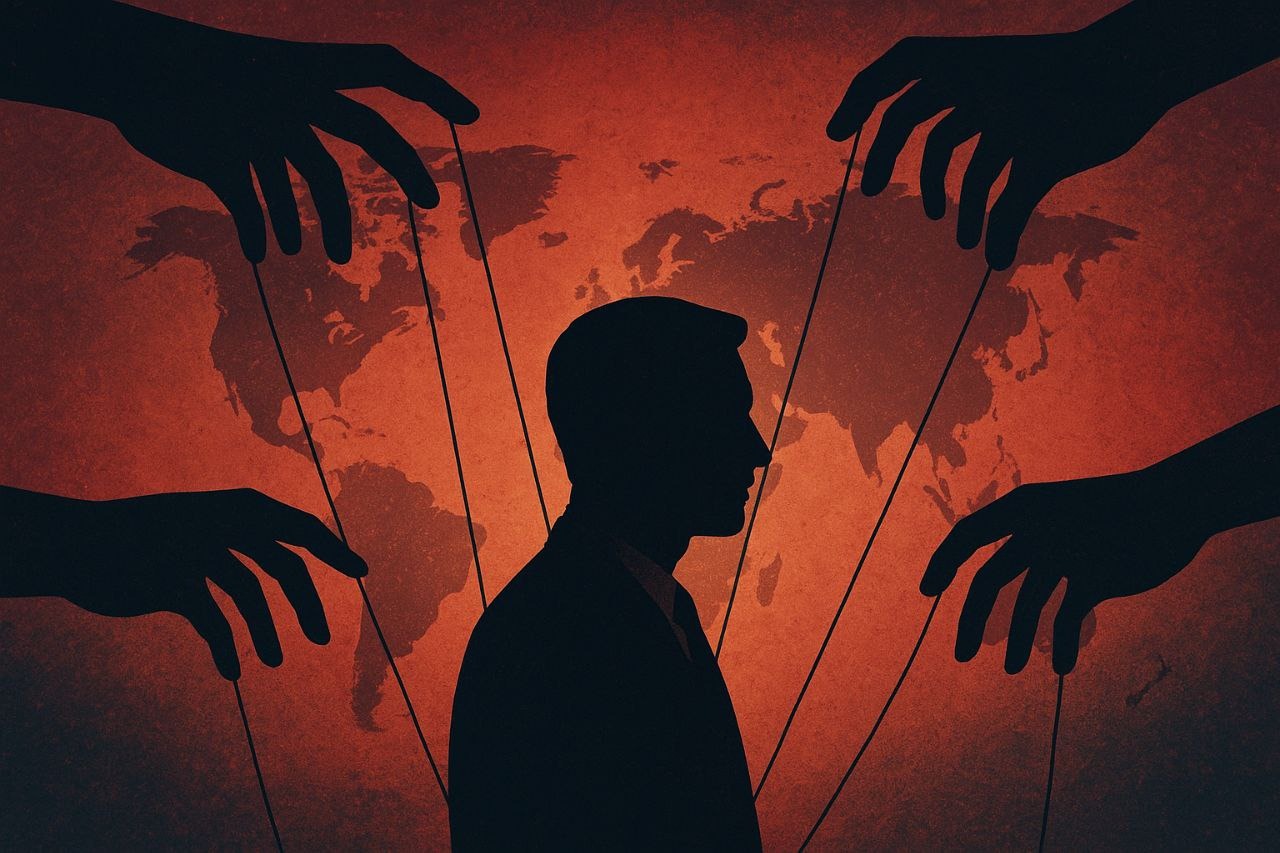
“A person controlled by too many hands eventually forgets which movements are truly his own.” ~ Adarsh Singh
There are stories whispered beneath the louder noise of geopolitics, stories that do not headline newspapers yet shape the invisible currents of nations.
Among these stories is the haunting possibility of an individual caught in the crossfire of multiple intelligence agencies, both foreign and domestic. This is not merely a political thriller script or a conspiracy concept, but a profound psychological and ethical maze:
✽ What happens when a human being becomes the battlefield for competing agendas?
Let's dive deep, into the psychology, strategy, existential crisis, and global implications of such a scenario. It extends across the realms of governance, national security, identity, and the fragility of personal freedom.
{1} When a Human Being Becomes a Strategic Asset
In the global intelligence ecosystem, individuals can become:
✽ Assets,
✽ Liabilities,
✽ Messengers,
✽ Saboteurs, or
✽ Symbols.
But the most complex role is that of the compromised individual, the one compelled into serving multiple masters simultaneously.
This dual or multi-agency control is not merely a matter of political manipulation; it is the engineering of fragmented loyalties within a single mind. It creates a living contradiction: someone who must move in two directions at once, speak from multiple scripts, and perform actions that advance and undermine them simultaneously.
“To be owned by one master is bondage; to be owned by many is dissolution.” ~ Adarsh Singh
{2} Layers of Compromise: How Multiple Agencies Trap a Single Individual
Intelligence control rarely starts with an overt command. It begins with subtle leverage:
✽ A mistake from the past.
✽ A vulnerability in the present.
✽ An opportunity for the future.
✽ A moral weakness.
✽ A financial dependency.
✽ An ideological alignment.
✽ A secret too heavy to escape.
When more than one agency discovers or cultivates such leverage, the individual becomes a multi-node instrument.
{A} The Domestic Agency’s Grip
The person is expected to:
✽ Maintain political alignment,
✽ Ensure influence on the home ground,
✽ Shape local narratives,
✽ Prevent threats to the national structure,
✽ Safeguard the illusions or the realities of stability.
The domestic handlers want predictability: someone who can be used to maintain equilibrium, influence elections indirectly, or weaken opponents quietly.
{B} The Foreign Agencies’ Pull
Foreign agencies, however, seek volatility:
✽ They want destabilization.
✽ They want pressure points inside a rival system.
✽ They want an operative who appears organic, independent, authentic.
✽ They want a voice that resonates but is actually guided.
Thus, the compromised individual becomes a bridge between domestic expectations and foreign ambitions.
✽ A bridge strained enough eventually cracks.
{C} Activism as a Mask, A Mandate, and a Manipulation
One of the most common covers for intelligence influence operations is activism.
Why activism?
✽ Because activism carries moral legitimacy.
✽ Because activism attracts youth, attention, and emotion.
✽ Because activism is difficult to question without appearing authoritarian.
✽ Because activism can be used to pressure the establishment from within.
The individual under multi-agency influence may be instructed to:
✽ Champion certain causes loudly,
✽ Remain silent on others strategically,
✽ Create social movements that look spontaneous but are engineered,
✽ Amplify outrage at key moments,
✽ Appear as the embodiment of public consciousness.
And yet, deep inside, there lies a hollowness:
Are these causes truly theirs, or are they just enacting scripts written in invisible ink?
“The loudest voices of protest are sometimes the quietest prisoners.” ~ Adarsh Singh
{3} The Election Paradox: Winning by Losing, Losing by Design
The proposition becomes even more complex when intelligence influence crosses into electoral politics.
If an individual is under multi-agency control, they may be forced to:
✽ Contest elections they are not meant to win,
✽ Lose elections deliberately to benefit a preferred candidate,
✽ Appear incompetent or controversial at strategic moments,
✽ Divide vote banks,
✽ Confuse public perception,
✽ Drain energy from genuine grassroots leadership,
✽ Support one party indirectly while appearing to oppose it publicly.
This is a disturbing strategic model called Electoral Misalignment Operations, where the appearance of political ambition masks a deeper manipulation.
Imagine the psychological toll:
✽ Working hard by day, sabotaging oneself by night.
✽ Raising hopes in public, crushing them in private.
✽ Appearing as a rising force while ensuring the rise never materializes.
It is political theater with invisible directors.
{4} Identity Erosion: The Inner Collapse of a Controlled Individual
Beyond geopolitics, there lies the tragedy of the individual.
Living a double game fractures identity. Being controlled by multiple agencies shatters it.
The person ends up experiencing:
{A} Cognitive Dissonance
Each set of handlers demands a different version of reality.
The compromised individual becomes a collector of contradictions.
{B} Chronic Surveillance Anxiety
They believe, often correctly, that they are being watched from all sides.
✽ Every conversation feels recorded.
✽ Every ally feels like a spy.
✽ Every silence feels like accusation.
{C} Existential Isolation
Who can such a person trust? Who can they confide in? How do they explain a life directed by invisible commands?
{D} Moral Decomposition
Serving contradictory agendas corrodes one’s moral compass. Ethics become fluid; loyalties become transactional.
“A man who walks too many paths eventually forgets which footprints are his own.” ~ Adarsh Singh
{5} The Handlers' Game: Why Multiple Agencies Prefer a Conflicted Asset
One might think an asset under multi-agency influence is unreliable. But actually, that is precisely the point.
{A} Conflicted assets are easier to control
They cannot disobey without consequences from multiple sides.
{B} They are perpetually destabilized
And a destabilized individual rarely has the clarity to rebel.
{C} They are politically useful
Their unpredictability keeps rivals confused and allies insecure.
{D} They can be sacrificed
When their usefulness ends, each agency blames the others. No one is accountable.
The asset becomes the scapegoat for everyone.
{6} When Nations Become Players and People Become Pawns
This phenomenon is not about a single man or a single party. It reflects a global pattern.
Throughout history, great powers have always sought internal voices in rival nations to:
✽ Sway public sentiment,
✽ Influence policy directions,
✽ Weaken democratic structures,
✽ Intensify polarization,
✽ Manipulate information flows.
In the modern era of digital reach and psychological operations, controlling one influential individual can create a ripple effect across millions.
But at the epicenter of this geopolitical storm is still… a person.
✽ A human being.
✽ A fragile mind.
✽ A compromised soul.
{7} The Psychological Price: Living Without Personal Freedom
Freedom is not merely the absence of chains. It is the presence of self-direction. A compromised individual loses that.
They live in the shadow world:
✽ Saying what is allowed,
✽ Thinking what is permitted,
✽ Moving where they are guided,
✽ Fighting battles that are not theirs,
✽ Losing wars they were ordered to lose,
✽ Wearing masks designed by others.
Their life becomes a script, and they are only the performer, never the author.
{8} The Path to Liberation: Is Escape Possible?
Theoretically, yes. Practically, rarely.
Escape requires:
✽ Severing all leverage points,
✽ Exposing all handlers,
✽ Risking retaliation,
✽ Rebuilding identity from scratch,
✽ Embracing loneliness,
✽ Reinventing purpose,
✽ Learning to speak in one voice after years of speaking in many.
This is nearly impossible without extraordinary courage. And even then, the individual must face the final truth:
✽ Freedom comes at a cost that most people are not willing, or able, to pay.
{9} A World of Shadows, A Life of Echoes
This entire proposition is not just a political hypothesis. It is a meditation on power, vulnerability, and the human mind under duress.
A person controlled by intelligence networks becomes more than a tool. They become a living paradox, a symbol of how power operates in the unseen corridors of the world.
But there is always a choice, even when the options seem invisible.
“The greatest rebellion is reclaiming the parts of yourself that others tried to own.” ~ Adarsh Singh
{{DATE}}
 Launch your Graphy