The Sacred Science of Dal: How Lentils Become Medicine in Ayurveda
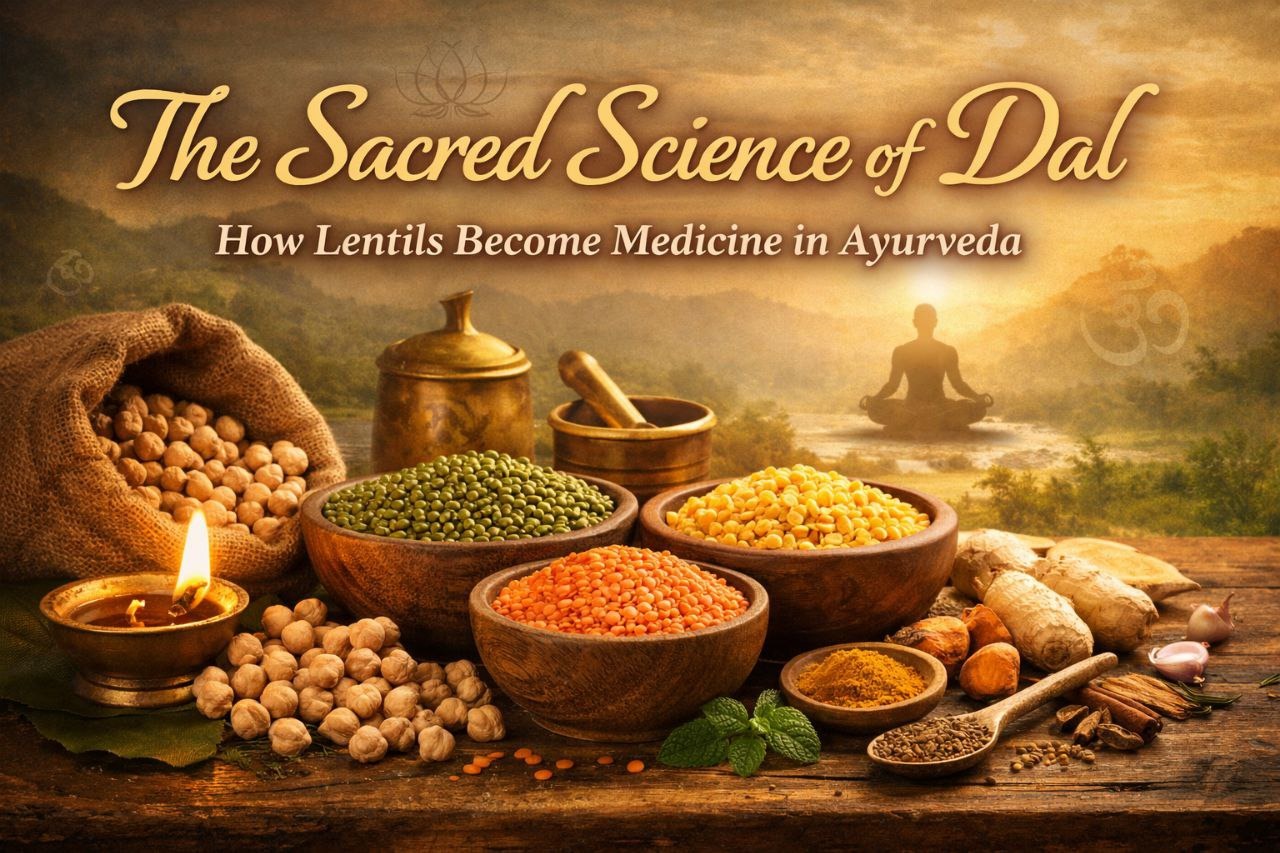
When Food Is More Than Nutrition
In Ayurveda, food is never just fuel. It is information, medicine, and energy that speaks directly to the body’s intelligence.
Among all foods, dal (lentils and legumes) occupy a unique, almost sacred position. They are simple, humble, and found in nearly every Indian household, yet Ayurvedically, they are potent tools for healing, balancing doshas, restoring digestion, and rebuilding vitality.
Modern nutrition looks at dal through the lens of protein, fiber, and micronutrients.
Ayurveda goes deeper, asking questions modern science often forgets to ask:
➤ How does this food behave inside the body?
➤ Does it heat or cool the system?
➤ Does it lighten or burden digestion?
➤ Does it calm the mind or agitate it?
Dal is not one substance. Each dal carries a distinct personality, a unique combination of Rasa (taste), Guna (qualities), Virya (potency), and Vipaka (post-digestive effect).
“Food is not digested only by the stomach; it is digested by awareness.” ~ Adarsh Singh
This blog is a complete Ayurvedic and naturopathic exploration of dal, written not as a recipe guide, but as a healing manual for the body, mind, and doshas.
The Ayurvedic Lens: Understanding Rasa, Guna, Virya, and Vipaka
Before understanding individual dals, one must understand the Ayurvedic framework through which food is evaluated.
✽ Rasa – The First Conversation With the Body
Rasa is taste but not merely what the tongue perceives. It is the initial signal sent to digestion, hormones, and the nervous system.
Most dals carry:
➤ Madhura (sweet) – nourishing, stabilizing, grounding
➤ Kashaya (astringent) – drying, absorbing, tightening
This dual taste explains why dals can both nourish and dry, depending on preparation.
✽ Guna – The Behavioral Nature of Dal
Guna describes how food behaves:
➤ Laghu (light) or Guru (heavy)
➤ Snigdha (unctuous) or Ruksha (dry)
➤ Picchila (slimy) or Vishada (clear)
A dal may be nutritious yet still harmful if its guna contradicts the body’s state.
✽ Virya – Heating or Cooling Energy
Virya determines whether a dal:
➤ Warm digestion (Ushna)
➤ Cools and soothes (Sheeta)
This is critical in inflammatory disorders, hormonal imbalances, and metabolic disease.
✽ Vipaka – The Final Outcome
Vipaka reveals what the food becomes after digestion, shaping long-term tissue health, waste elimination, and doshic balance.
Moong Dal: The Gold Standard of Healing
Among all dals, moong dal is unparalleled. Classical Ayurvedic texts consistently regard it as the safest, lightest, and most therapeutic legume.
Moong dal is:
➤ Light enough for the weakest digestion
➤ Nourishing enough for convalescence
➤ Neutral enough for all three doshas
Its cooling Virya soothes inflammation, while its lightness prevents ama (toxic buildup).
“When the body is confused, simplicity heals faster than complexity.” ~ Adarsh Singh
Moong dal becomes medicine in:
➤ Fever recovery
➤ Detoxification protocols
➤ Panchakarma preparation
➤ IBS, acidity, and gut inflammation
➤ Skin disorders rooted in blood impurities
Prepared as a thin soup, moong dal does not burden digestion; it supports it.
Masoor Dal: Blood, Heat, and Caution
Masoor dal is deeply connected to rakta dhatu (blood tissue). Its astringent taste gives it blood-absorbing and pitta-pacifying properties.
However, Masoor dal carries a dryness that can aggravate Vata if consumed carelessly.
In therapeutic contexts, Masoor dal supports:
➤ Skin detoxification
➤ Mild inflammatory conditions
➤ Cooling diets for excess pitta
But Ayurveda warns against daily or excessive consumption, especially in individuals with dryness, anxiety, or joint issues.
Toor Dal: Strength, Warmth, and Digestive Fire
Toor dal (Arhar) carries warmth and nourishment. It strengthens the body and stimulates digestive fire when digestion is sluggish.
It is grounding and stabilizing, making it useful in:
➤ Chronic fatigue
➤ Undernourishment
➤ Vata-dominant constitutions
Prepared with appropriate spices, Toor dal builds strength without heaviness.
Chana Dal and Chickpeas: Power With Responsibility
Chana in all forms is heavy, drying, and strengthening. It is not a dal for healing weak digestion, it is a dal for stable, strong systems.
Its Ayurvedic role is clear:
➤ Reduce excess Kapha
➤ Build muscular endurance
➤ Increase stamina and satiety
However, improperly prepared Chana creates:
➤ Gas
➤ Bloating
➤ Digestive stagnation
Soaking, slow cooking, and correct spicing are not optional, they are essential.
Urad Dal: Medicine or Mistake
Urad dal is powerful, and dangerous if misunderstood.
It is:
➤ Extremely nourishing
➤ Highly warming
➤ Deeply grounding
Ayurveda uses urad dal therapeutically for:
➤ Severe Vata disorders
➤ Joint degeneration
➤ Reproductive weakness
➤ Post-illness rebuilding
But for modern sedentary lifestyles, urad dal easily becomes a source of:
➤ Weight gain
➤ Mucus accumulation
➤ Inflammation
“What heals a weak body can harm an unprepared one.” ~ Adarsh Singh
Urad is medicine, not routine food.
Rajma, Chole, and Heavy Legumes: Modern Food, Ancient Warnings
Large beans like rajma and chole are not traditional Ayurvedic staples. Their heaviness and gas-producing nature demand strong digestion.
They are best consumed:
➤ Occasionally
➤ In winter
➤ With digestive spices
➤ By physically active individuals
In healing diets, these legumes are generally avoided.
Dosha-Wise Dal Selection: Eating According to Inner Climate
✽ Vata Dosha
Vata requires warmth, lubrication, and grounding.
Moong dal remains ideal. Toor dal and small quantities of urad can support Vata when cooked with ghee and warming spices.
Dry, heavy, and cold legumes aggravate Vata and must be avoided.
✽ Pitta Dosha
Pitta requires cooling, soothing, and moderation.
Moong dal again emerges as the safest choice. Masoor and green peas may be used selectively.
Excessively spicy, oily, or fermented dals disturb Pitta balance.
✽ Kapha Dosha
Kapha requires lightness and stimulation.
Thin moong dal soups work well. Chana may be used sparingly.
Heavy, oily, and mucous-forming dals such as urad and soy should be minimized.
Dal in Naturopathy: Food as a Healing Tool
Naturopathy views dal not as a protein substitute, but as a digestive modulator.
Moong dal soups are used in:
➤ Detox fasting
➤ Liver cleansing
➤ Metabolic resets
➤ Gut healing protocols
Sprouted legumes, lightly cooked, are introduced only when digestion improves.
In healing diets:
➤ Quantity matters more than variety
➤ Simplicity matters more than nutrition charts
➤ Digestibility overrides protein obsession
Dal, Mind, and Consciousness
Ayurveda recognizes that dal influences not only tissues, but mental clarity and emotional stability.
Heavy, improperly cooked dals dull the mind.
Light, well-prepared dals support sattva: clarity, calmness, and emotional balance.
“The mind becomes heavy not because of thoughts, but because of undigested experiences, including food.” ~ Adarsh Singh
Preparation: Where Healing Is Decided
The same dal can heal or harm based on:
➤ Soaking
➤ Cooking duration
➤ Spices
➤ Quantity
➤ Timing
Ayurveda teaches:
➤ Always cook dals thoroughly
➤ Never consume cold dal
➤ Use spices consciously
➤ Eat with awareness
Dal as Daily Sadhana
Dal is not merely Indian comfort food. It is a daily practice of balance.
When chosen wisely, cooked correctly, and eaten consciously, dal becomes:
➤ A digestive ally
➤ A detox tool
➤ A strength builder
➤ A dosha balancer
➤ A quiet teacher of simplicity
“True nourishment is not how much you eat, but how deeply your body accepts what you eat.” ~ Adarsh Singh
Wed Jan 14, 2026
 Launch your Graphy